
Accomplishments
Streamflow Restoration Accomplishments in the Deschutes Basin

"A healthy watershed is the foundation of everything we value here in Central Oregon. We can have a river that supports agriculture, recreation, fish and wildlife, and the communities that have grown up alongside it. That future is something we build together." - Kate Fitzpatrick, Executive Director
Since 1996, the communities of the Deschutes Basin have helped drive some of the most ambitious streamflow restoration efforts in the Northwestern United States.
By the early 1900s, much of the streamflow in the Upper Deschutes Basin was diverted into irrigation canals during the growing season causing low summer flows in the Middle Deschutes River and in tributaries like Whychus Creek, the Crooked River, and Trout Creek. Rivers and streams struggled to support the fish and wildlife that depend on them. The addition of storage reservoirs in the mid-1900s created low winter flows and artificially high summer flows in the Upper Deschutes River. Altered and fluctuating flows don't just reshape a river channel, they unravel entire ecosystems.
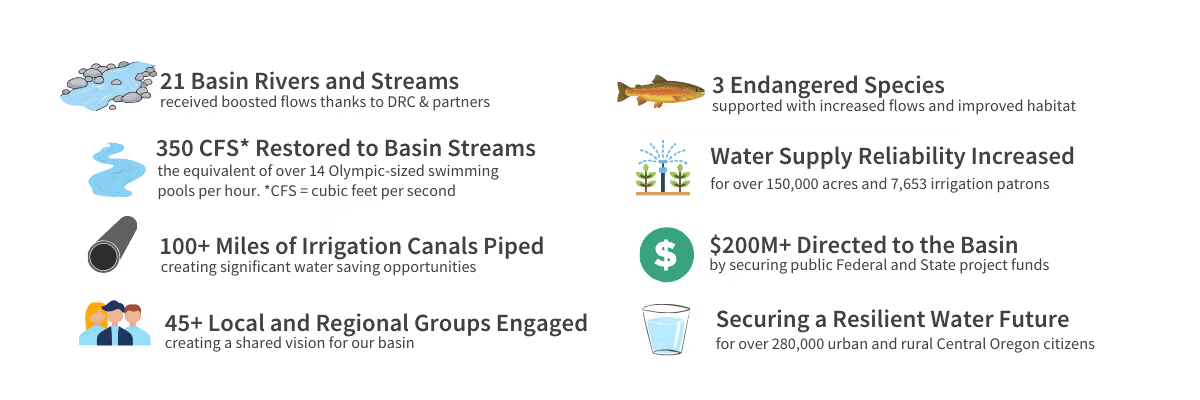
Working alongside irrigation districts, water managers, and basin partners for over three decades, DRC has employed voluntary market-based programs and water conservation projects to restore more than 350 cubic feet per second of flow throughout the Deschutes Basin. That's over 157,080 gallons per minute flowing instream.
Grants and project funding cover much of this on-the-ground conservation work, but the invisible infrastructure of conservation—the hours invested to build trusted partnerships, collaborate with diverse stakeholders, advance innovative common-sense policy, and engage with the community—is what makes streamflow restoration possible. It is the support of the community that allows DRC to leverage these significant state and federal investments to drive meaningful impact in the Deschutes Basin.
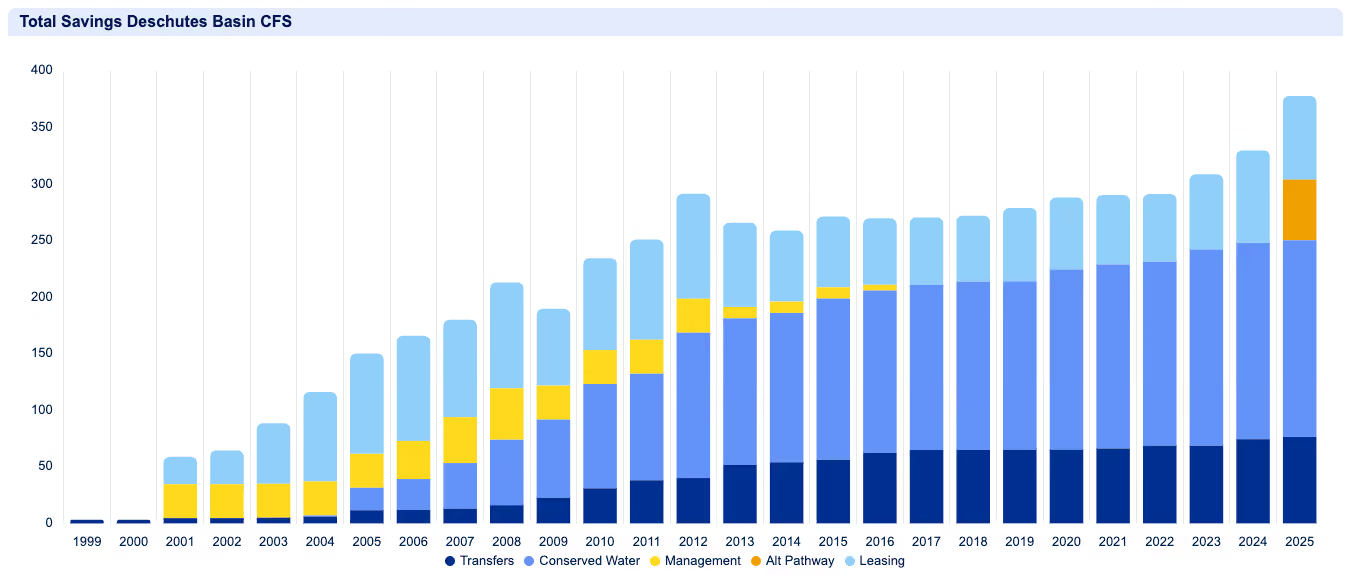
Flow Restoration Progress Over the Years
We measure streamflow restoration progress through an increase in cubic feet per second (CFS) throughout the Deschutes River Basin. Through collaborating with basin partners, DRC restores streamflow through water rights leasing (light blue), water management agreements (yellow), permanent water rights transfers to streams (dark blue), and water conservation projects such as piping leaking canals and creating more efficient irrigation practices (medium blue and orange). This progress over the last three decades was made possible by engaged community support and enduring partnerships.
Grants and project funding cover much of this on-the-ground conservation work, but the invisible infrastructure of conservation — the hours invested to build trusted partnerships, collaborate with diverse stakeholders, advance innovative common-sense policy, and engage with the community is what makes streamflow restoration possible. It is the support of the community that allows DRC to leverage these significant state and federal investments to drive meaningful impact in the Deschutes Basin.