
Bend Bulletin: Warm, dry January raises renewed snowpack concerns
By Michael Kohn
Central Oregon is experiencing a case of weather whiplash.
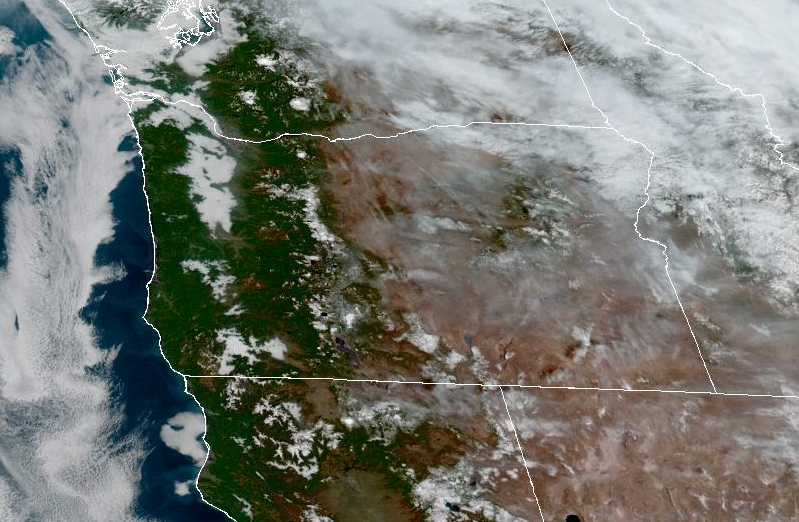
Just one week after a blast of winter weather blanketed the Central Cascades in snow, warm temperatures are again melting snowpack, raising concerns about water supplies later in the year.
Daytime temperatures are forecast to reach the mid- to upper 50s through midweek in Bend before cooling slightly by Thursday, said Marc Russell, a meteorologist with the National Weather Service in Pendleton.
Overnight lows are expected to remain above freezing at lower elevations, generally in the mid-30s with little to no chance of precipitation for at least 10 days.
The unusually mild conditions are caused by a strong ridge of high pressure over the central and western United States, a pattern that forecasters had been anticipating, said Larry O’Neill, Oregon’s state climatologist.
“The Pacific Northwest commonly gets what is called a mid-winter dry spell sometime during January through mid-February. These usually last one to two weeks,” said O’Neill. “We experienced a particularly long-lasting one last January.”
The current pattern is causing inversion and stagnant air conditions near the surface that will continue to trap pollutants, according to the National Weather Service. An air stagnation alert remains in effect until Friday.
Snowpack concerns The lack of cold and wet weather is having a pronounced effect on snowpack, said Matt Warbritton, supervisory hydrologist with the Natural Resources Conservation Service.
As of Tuesday, snow water equivalent — a key measure of water stored in the snowpack — in the Upper Deschutes-Crooked Basin was just 36% of normal, the third-lowest level recorded since measurements began in 1981, Warbritton said.
At the McKenzie SNOTEL site northwest of North Sister, snowpack levels are the lowest on record dating back 45 years. Several other monitoring sites, including Derr, Ochoco Meadows and Three Creeks Meadow, are also reporting near-record low snow water equivalent for this time of year.
Statewide, Oregon is experiencing its second-worst snow season on record, trailing only the winter of 2015, O’Neill said.
Water year-to-date precipitation in the basin stands at 87% of normal. Despite a wetter-than-normal December, Warbritton said early-season precipitation deficits combined with abnormally warm temperatures have resulted in an overall moisture shortfall.
“We are still in the early part of the season, and one or two good storm cycles could make up for the deficit,” Warbritton said. “What’s notably concerning is the lack of high-elevation snowpack.”
O’Neill said temperatures at elevations above 5,000 feet are still dropping below freezing at night, which should help preserve existing snowpack in the short term.
“There will be some daytime snowmelt, but the snowpack should remain above 5,000 feet for at least the next week,” he said. “Beyond that, it’s tough to tell, especially since there’s no significant snowfall in the forecast.”
The Oregon Water Resources Department says the warming weather is not expected to cause flooding in Central Oregon.
“Flooding in the Deschutes Basin typically results from rain-on-snow events,” said Carolyn Sufit, OWRD’s central region manager. “While temperatures will be unseasonably warm this week, there is no forecast for significant rainfall. Without rain on top of the snowpack, we are unlikely to see melt rates that result in any flooding.”
Sufit adds that because snowpack levels are low, a rain event, if one were to occur, would be unlikely to generate flooding conditions.
A look ahead
Forecasters say the outlook will stay dry for now, with temperatures continuing to be at or above normal, a situation that could have broader implications for water supplies later in 2026. For now, at least, area reservoirs remain stable — as of Tuesday, Wickiup Reservoir was 73% full and Prineville Reservoir was 57% full.
“While flooding is not a concern, these conditions do raise concerns for water supply, said Sufit. “Streams that are primarily snowmelt-fed, rather than spring-fed, are likely to experience very low flows unless substantial snowfall occurs in the next 60 days to offset the current deficit.”
Sufit says that as the irrigation season approaches, low snowpack will affect the natural flow of the Deschutes River. Although snowpack and precipitation were stronger over the past three winters, spring-fed streams had only begun to show modest signs of recovery following several years of drought.
“A continuation of dry, warm conditions this winter could reverse those gains,” said Sufit.
Read more at: https://bendbulletin.com/2026/01/13/warm-dry-january-raises-renewed-snowpack-concerns/
