
Bend Bulletin: Tribes turn to beaver-inspired dams to revive Central Oregon streams
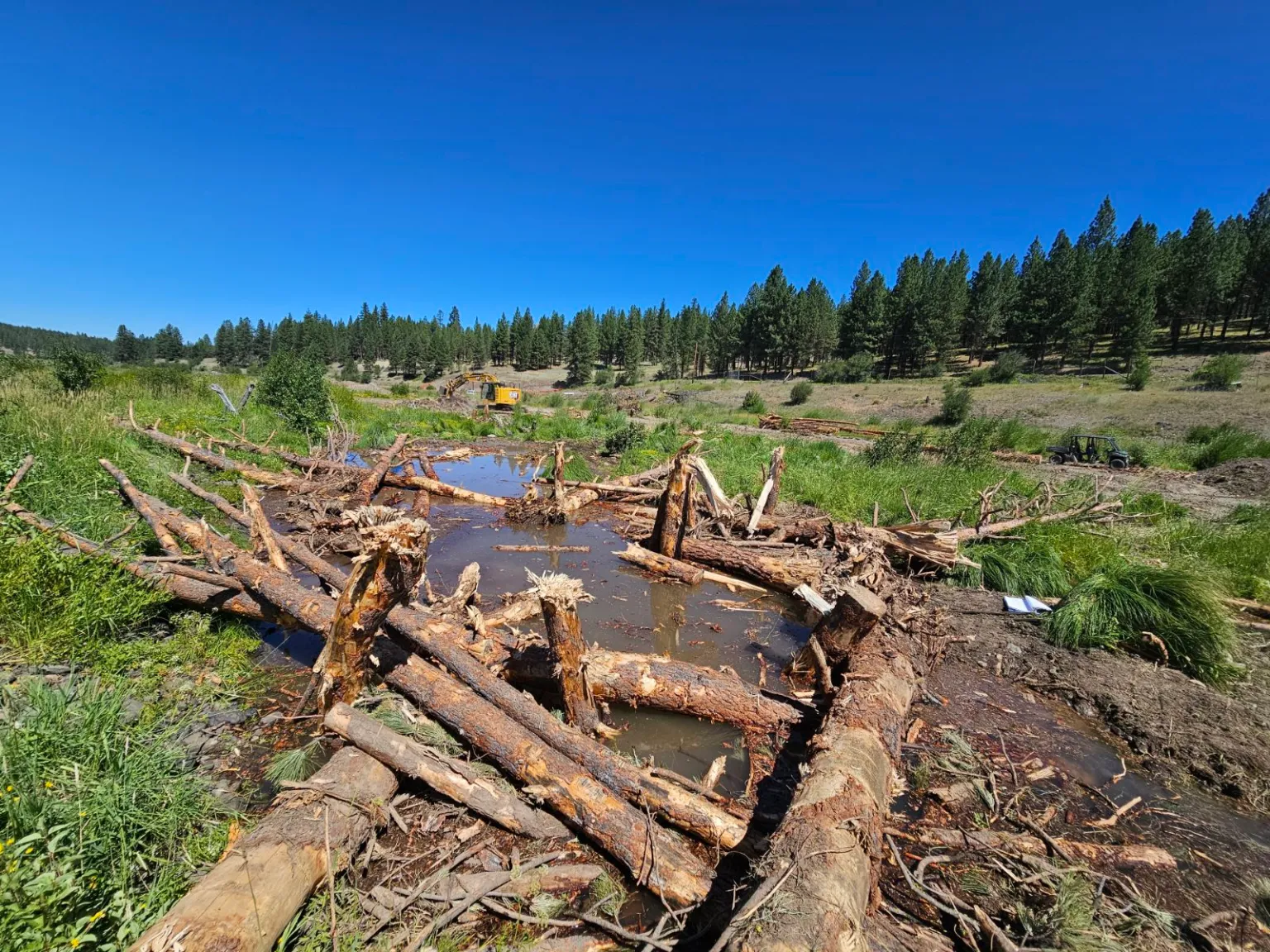
Photo: About half a dozen structures have been installed in recent years on waterways including Coyote Creek and Beaver Creek, with additional sites under consideration.
By Michael Kohn
In remote areas of the Warm Springs Reservation and sometimes far off it, restoration crews are rebuilding creeks with an unlikely partner: the beaver.
Rather than relying on large equipment, the Confederated Tribes of Warm Springs are installing beaver dam analogs — wooden structures modeled after natural dams — to slow water, revive wetlands and create cold-water refuge for young salmon.
The structures, made of wooden posts and branches driven into stream beds, are designed to mimic the effects of natural beaver dams. By slowing the flow of water, they allow streams to spread into surrounding soil, raising the water table and encouraging willows, cottonwoods and other native vegetation to return.
“It’s slowing down the energy as water moves through the watershed,” said Austin Smith Jr., general manager of the natural resources branch of the Confederated Tribes of Warm Springs. “As you do that, you increase water storage, you create wet meadows and you create cold-water refuge for salmonids,” Smith added.
About half a dozen of the structures have been installed in recent years on waterways including Coyote Creek and Beaver Creek, with additional sites under consideration, particularly along fish-bearing streams that support steelhead.
The projects are relatively inexpensive compared with major infrastructure work. Materials for a single beaver dam analog typically cost between a few thousand dollars and about $15,000, depending on the size of the stream. Tribal staff and youth crews carry out much of the installation work.
Restoration efforts go beyond placing wooden barriers in streams. Crews also plant vegetation along banks to provide food and building material for beavers, increasing the likelihood the animals will move in and maintain the sites naturally.
“If you plant the food, the beavers will move in,” Smith said. “Just putting a structure in doesn’t guarantee that.”
In some areas, beavers have returned as habitat improved. Tribal officials have also discussed relocating nuisance beavers removed from nearby highways rather than killing them, potentially strengthening populations on the east side of the Cascades.
Beavers once played a central role in shaping Central Oregon’s waterways, creating ponds and wetlands that stored water and supported fish and wildlife. Over the past century, road construction, livestock grazing and stream channel straightening altered many of those systems, allowing water to move quickly through watersheds instead of soaking into floodplains.
The effort to build beaver dam analogs for habitat restoration is not new in Central Oregon. Biologists have installed analogs on other waterways, including the Crooked River, where water quality has improved since their appearance.
On parts of the reservation, aging culverts and road crossings still cut through fish-bearing streams. In some cases, natural beaver activity has flooded roads built too close to waterways, highlighting the tension between infrastructure and natural processes.
“It’s kind of Mother Nature telling us, don’t put a road right here,” Smith said.
The restoration work is part of a broader watershed strategy that includes removing invasive juniper, thinning overgrown vegetation and reintroducing cultural burning practices to improve upland habitat. Slowing water in headwater streams can also create wet meadows that act as carbon sinks, storing carbon in soil and plant growth.
Much of the funding for the beaver projects comes through Bureau of Indian Affairs self-governance funds, with additional support tied to fisheries restoration efforts. Work is often phased around seasonal restrictions that limit in-stream activity during fish migration.
Tribal officials say the long-term goal is to restore watershed function so salmon and steelhead — species central to tribal culture and treaty rights — can thrive.
“We’re fixing areas where we’ve seen land degradation over 100 years,” Smith said. “This is one piece of the answer.”
Read more at: https://bendbulletin.com/2026/02/16/tribes-turn-to-beaver-inspired-dams-to-revive-streams-on-warm-springs-reservation/
