
Sisters Nugget: Deepest drought in decades for C.O.
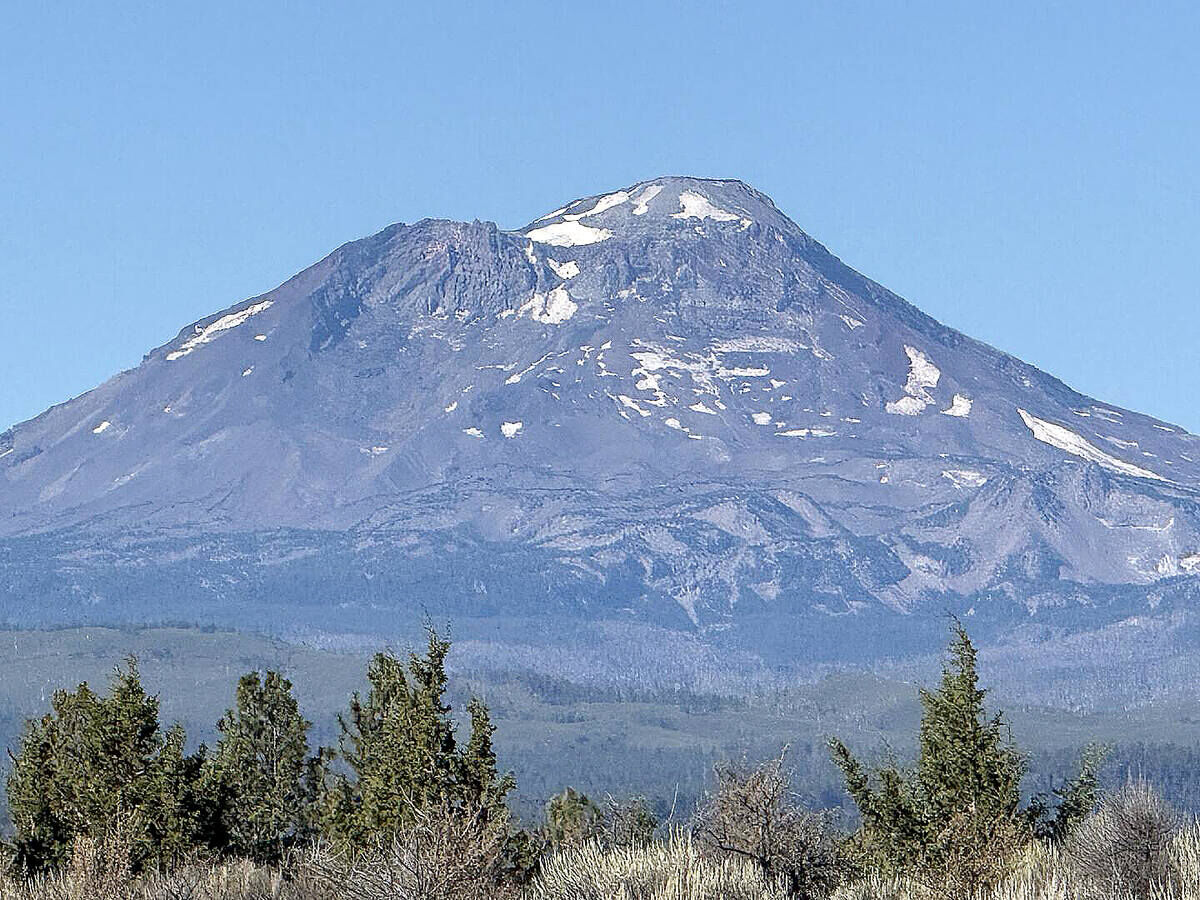
Central Oregon is in the grip of one of the most severe droughts in the region's modern history, as a record-warm winter and near-record-low snowpack push reservoirs, streams, and irrigation districts to their limits heading into late summer.
The mountains are virtually bare - indicative of deep drought conditions.
As of early August, 21 of Oregon's 36 counties - including all of Central Oregon - are under a state drought emergency, part of a run of six executive orders Governor Tina Kotek has signed since March. Statewide drought coverage hit 87 percent by mid-June, and officials say conditions are unlikely to ease before fall.
"Communities across the state are being confronted with unprecedented drought conditions," Kotek said in one of this year's declarations. "My office and relevant state agencies are at the ready to assist affected communities address drought impacts and continue efforts to secure a stronger, more climate-resilient Oregon."
A winter that never showed up
The roots of this year's drought trace back to last winter, which tied 1934 as Oregon's warmest on record, according to NOAA data cited by the Governor's Office. The warmth meant precipitation that should have piled up as mountain snowpack instead fell as rain or simply didn't materialize.
By early February, Deschutes Basin Watermaster Jeremy Giffin reported snowpack near Wickiup and Crane Prairie reservoirs - the reservoirs that feed irrigation and streamflow across the basin - at just 28% of normal, down from 126 percent a year earlier.
More recently Griffin described the current situation this way: "We have a couple benchmarks that show it to be the worst drought in Central Oregon since the dustbowl. One is how early some snotel sites melted out and ... how far down the priority list we have regulated off water uses this year including some users who were shut off and have never been shut off since their water use started in 1904."
William D. Nashem, District 24 watermaster, described the situation on the ground: "We are in the thick of a very poor precipitation year with a record low runoff in the Crooked River Basin. Similar conditions also exist in the Deschutes Basin with other distinct effects due to different geology and groundwater hydrology. Water use is curtailed throughout Central Oregon because of the drought."
The Oregon Water Resources Department (OWRD) has drawn a direct comparison to 2015, the last time a warm, low-snow winter triggered widespread state drought declarations - that year, 25 of Oregon's 36 counties were declared. State officials say 2026 could match or exceed that mark before the year is out. More broadly, OWRD notes the period since 2000 has been the driest stretch in Oregon in the past 1,200 years.
Reservoirs draining fast
The consequences are visible on the ground. Wickiup Reservoir, the largest of the Cascade Lakes and a key source for irrigation from Bend to Madras, was 88 percent full in early March thanks to strong carryover from the prior year. By late July it had fallen to just 33 percent full and was "draining quickly," according to the Oregon Department of Fish and Wildlife's fishing report - low enough that the boat dock at North Wickiup sits out of the water.
Downstream, the effects hit irrigators directly. Arnold Irrigation District, which serves more than 600 farms, ranches, and other properties in southwest and southeast Bend, shut off water deliveries entirely on July 2 - what District Manager Chris Webb called the earliest shutoff in the district's history. The district had already cut deliveries 20% in mid-May as natural flows on the Little Deschutes River fell well below normal.
By July 7, the U.S. Drought Monitor showed 61 percent of Deschutes County and roughly two-thirds of Crook County in extreme drought, with Jefferson County's extreme-drought footprint jumping from under six percent to more than 43 percent in a single week.
Three Sisters Irrigation District reports that effective July 30, 2026, water is at 20% for all 1895 water rights holders.
What it means for the City of Sisters
Inside the city of Sisters the picture is somewhat more reassuring - at least for now. Sisters draws its municipal water entirely from groundwater, pumped from four city wells that tap into the same volcanic aquifer system that feeds the Deschutes River and springs across the region. City officials, including Public Works Capital Projects Manager Paul Bertagna and City Manager Jordan Wheeler, have expressed confidence in both the quantity and quality of that supply; one of the city's wells, at Creekside Campground, alone produces 1,500 gallons per minute.
But the broader groundwater trend is a concern. At a March 2 presentation to the Deschutes County Board of Commissioners, OWRD hydrologists reported that the basin's average groundwater level declined about one foot per year through the mid-1990s - a rate that has accelerated to roughly two and a half feet per year since 2000. Precipitation records show eight of the last 12 years came in below the historical median.
County Commissioner Phil Chang has noted that because Sisters' supply is entirely groundwater-dependent, the city has no surface-water backup to fall back on if wells were ever compromised - and he's flagged particular concern for rural residents on shallow wells, especially around La Pine, where some wells draw from a thinner, more vulnerable layer of the aquifer.
The state is now asking any Oregonian whose well runs dry or underproduces to report it at owrd.info/drywell, both to track emerging problems and to connect affected households with assistance, including the Well Abandonment, Repair and Replacement Fund for low- and moderate-income homeowners.
What's next
State officials expect drought conditions to persist through the rest of the summer and are urging conservation statewide. For Sisters Country, the immediate risk looks more acute for surface water users - irrigators, anglers, and downstream farms - than for the city's own tap water. But with reservoirs at historic lows and groundwater in a decades-long decline, local officials and hydrologists say the margin for another dry winter is thin.
