
Sisters Nugget: Salmon return home to Metolius River
In a scenic mountain valley, a very old story echoes in the splash of water on stone and the scent of cool alder leaves. There was an epic journey by legendary fish in wild rivers and the vast sea. Then a quiet pause for 50 years. But this summer a new chapter is being told about the ocean-going, anadromous fish that once came and went from our rivers.
In the 1960s, the journey of thousands of salmon and steelhead on their way to the ocean and back was interrupted by the installation of a three-dam complex on the Deschutes River to generate power. Despite fish ladders for adults heading upstream, the little smolts got lost in the lake on their way downstream and the runs were gone by 1968 (See related story in EXTRA -Feature story).
The exciting news this summer is that after 20 years of a reintroduction effort begun by the Confederated Tribes of Warm Springs (CTWS) and Portland General Electric (PGE), many Deschutes Basin Chinook salmon are returning from the sea. This is a grand experiment and momentum is growing. Fish are returning to the Deschutes in such numbers that some are getting picked for a quick ride upriver to the Metolius River, to swim free in those cold waters once again, reproduce, and die.
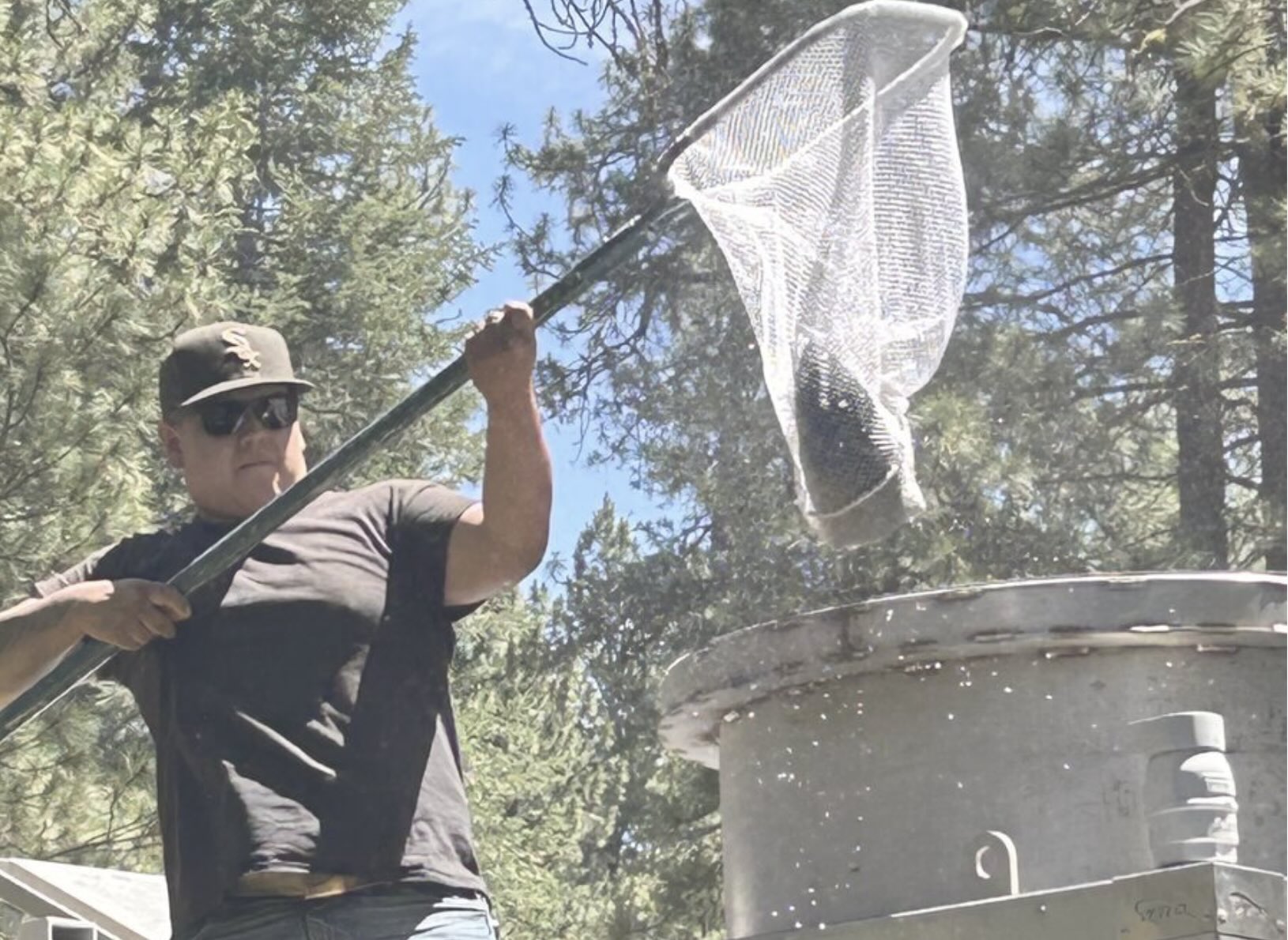
The CTWS and PGE are co-owners of the three-dam hydroelectric complex called the Pelton Round Butte Project. Since Memorial Day, they have released over 200 spring Chinook adults into the Metolius near Camp Sherman. Fish travel from the hatchery near Madras in a tanker truck and are netted and released to quiet pools where they quickly disappear in swirls of dark water. This gives the fish a shortcut around the dams, in what one biologist called "assisted migration", with hopes of boosting the restoration of the ancient runs.
The Pelton Round Butte Project was built in stages. Pelton Dam was built in 1958. The Reregulating Dam, to smooth fluctuations in water releases from the power generation, was completed shortly after Pelton. The 440-foot-high Round Butte Dam was finished in 1964 and created Lake Billy Chinook reservoir, backing water up the Deschutes River, Crooked River, and Metolius River canyons. When the Federal Energy Regulatory Commission issued PGE and CTWS a new 50-year operating license for the dams on June 16, 2005, there was a pledge to restore the iconic fish runs. The Fish Passage Plan relied on collecting both smolts on their way to the sea, as well as adults returning from the sea, and passing them around the dams. In concert with passage work, millions of dollars of habitat restoration and fish barrier removal was also done to prepare rivers and creeks for the return.
Fish movements in the Deschutes Basin are complex. The three rivers that create Lake Billy Chinook have very different temperature regimes and nutrients. Fish may travel up more than one river. This requires a variety of strategies and adapting management as needed to reach the goal of self-sustaining and harvestable fish runs. Many people who have been involved since the start counsel that patience is required.
A centerpiece to facilitate fish passage at the dams is the Selective Water Withdrawal tower at Round Butte Dam, completed in 2010. The tower creates currents that attract young fish (both salmon and steelhead) to a collection facility. Managers learned smolts liked to travel in the dark and started night operations to create current to help them along. The fish are then transported downstream past the dams. A part of the old fish ladder is used to rear spring Chinook fingerlings to smolt size from November to April/May before they are released into the lower Deschutes River at the Reregulating Dam.
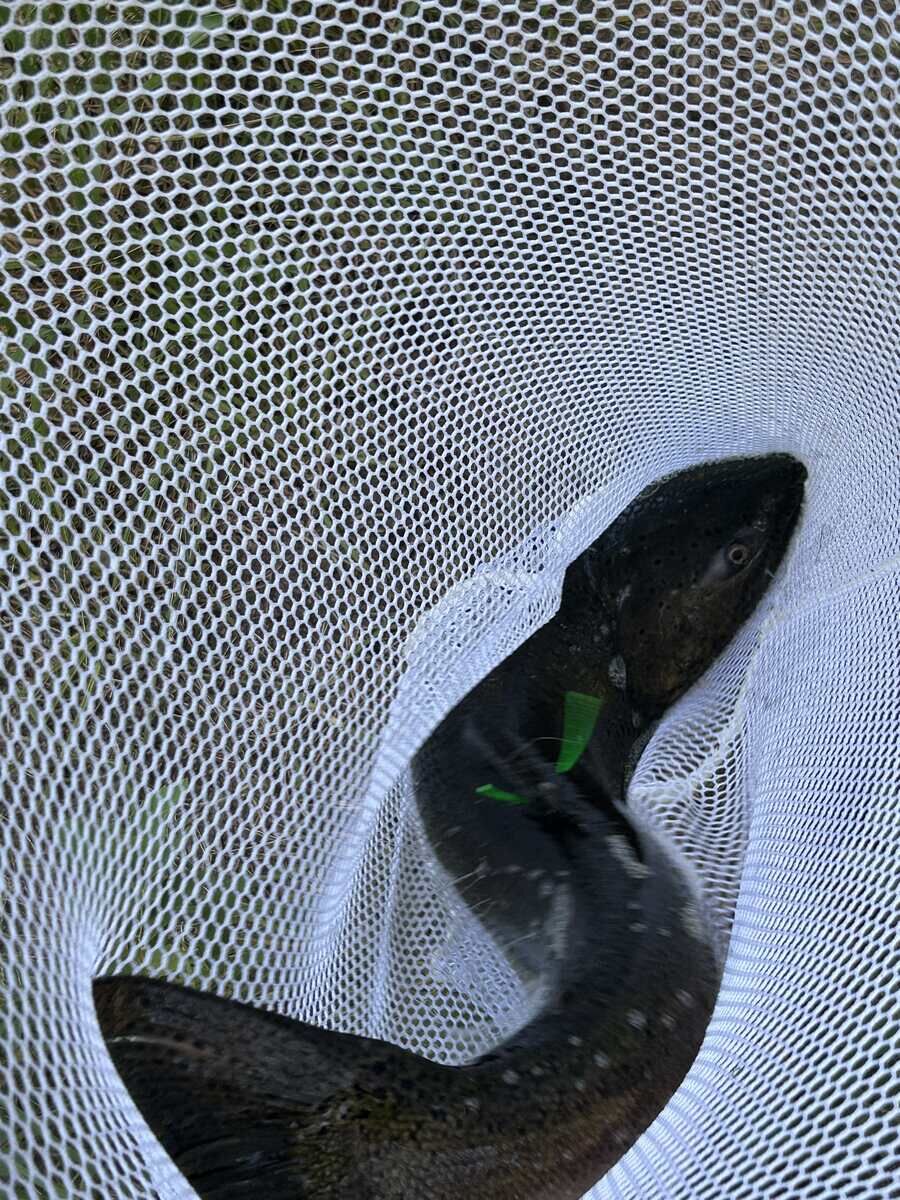
According to PGE Spokesman John Farmer, the Chinook adults being placed in the Metolius are of two kinds: 1) Smolts that were acclimated to local waters in large tanks in the upper watersheds, or 2) Smolts that were released to travel downstream from the Hatchery without acclimation or time in the upper river. Managers keep track of the returns and tell these fish apart by a series of different clips on fins and mouth parts. They hypothesize the acclimation of smolts to their local waters may be important. But monitoring and adjusting the plan with new information is crucial.
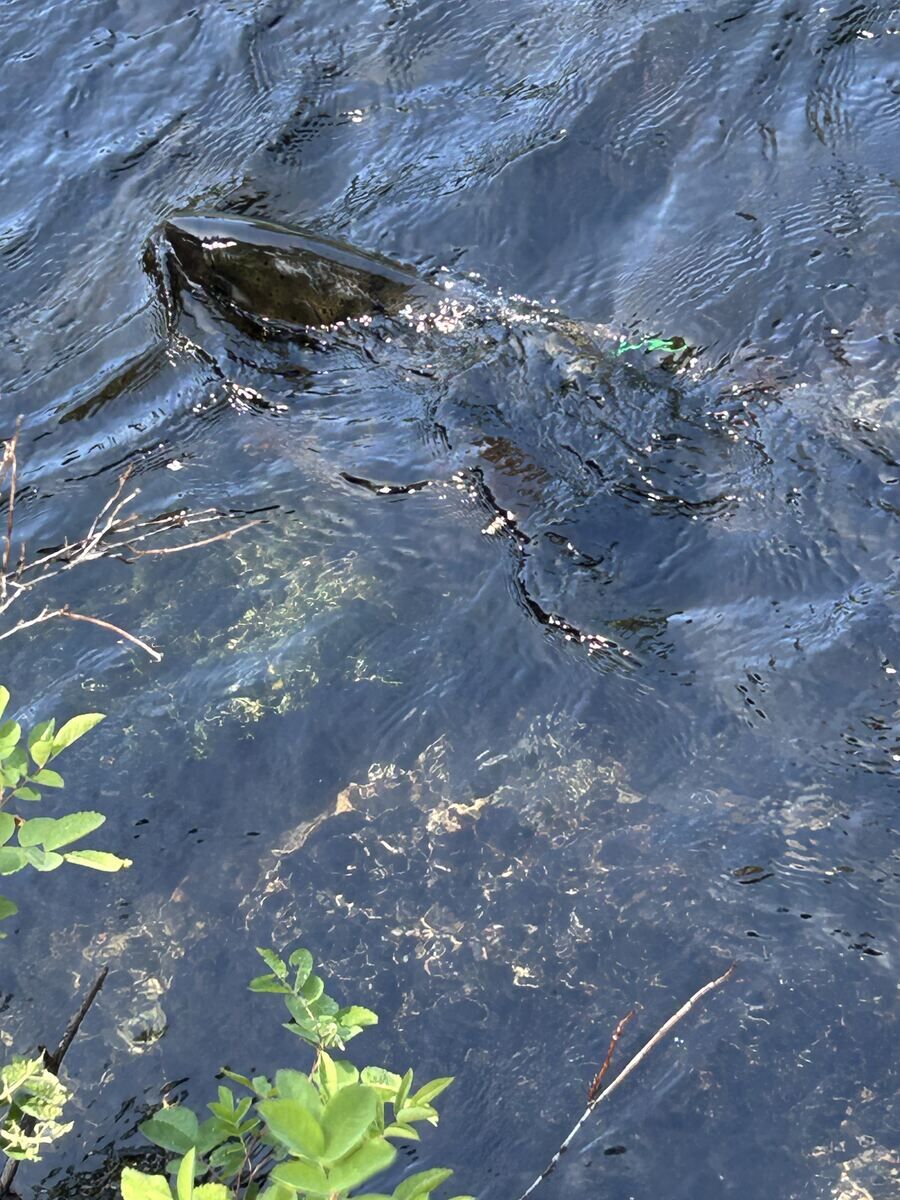
The newly arrived Metolius Chinook are hard to see. They undergo coloration changes as they move from salty ocean water into fresh river water. They start out shiny and silvery from the ocean. As they travel up the river, they turn to an olive or bronze body, with wine-colored hues along the sides, a dark olive to nearly black head and back, and black gums.
If you are lucky enough to see one of these cryptic miracles, please do not harass or disturb them. Summer can be stressful enough. Additional handling or harassment can reduce the energy reserves they need for spawning, and contribute to fish dying before they can successfully reproduce.
Now that the salmon we dreamed of are swimming free in the river, what's next? Farmer concludes, "In a watershed as unique as the upper Deschutes, rebuilding these populations is a long-term effort that can take decades. Seeing adult fish return is an important sign of progress, but the true measure of success is a complete life cycle-from spawning and fry emergence to smolt migration and the eventual return of those fish as adults. Each stage helps demonstrate that restoration efforts are moving in the right direction. These adult spring Chinook have reached the final stage of their life cycle, and their legacy is the next generation of fish. As eggs hatch and fry begin to grow, the goal is for enough young fish to survive, migrate downstream, and eventually return as adults to spawn in the basin once again."
Next time you're at the Metolius, keep an eye out for a large dark shape gliding through the water. They're back...
Cover photo: PGE Specialist netting Chinook by Maret Pajutee
