
Sisters Nugget: Water district restricts flows to 10 percent
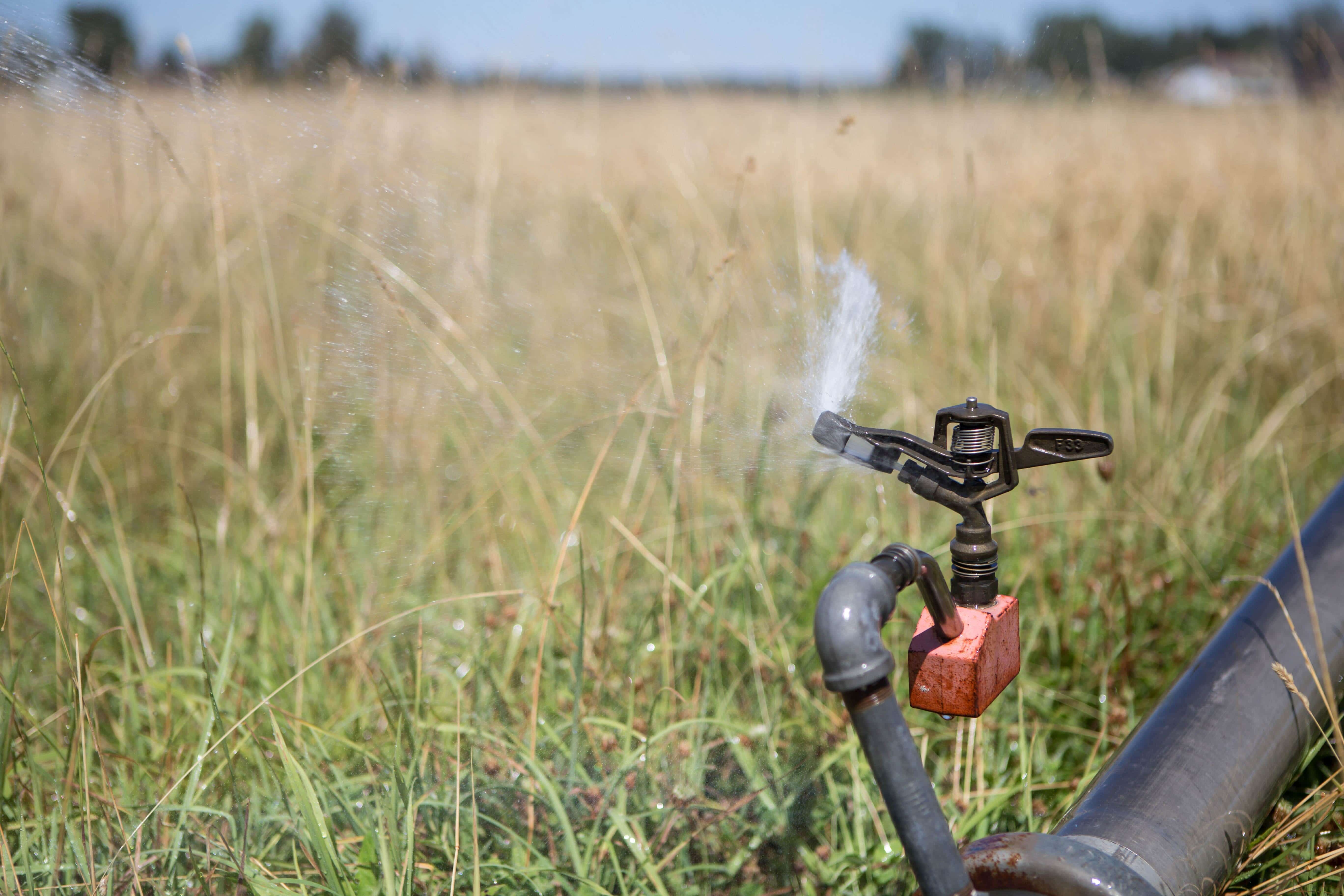
Having reduced water deliveries to 20 percent on July 30, the Three Sisters Irrigation District (TSID) reduced the flow even further – to 10 percent – on August 14.
Will deliveries cease altogether as the drought persists? Emelia Ellington, the District’s manager doesn’t think so.
“It depends on creek levels. If they maintain until the rain starts, I don't foresee an early shut off,” she said.
“Whychus Creek continues to drop, and this is the lowest we've been. We know these reductions are hard, and we truly appreciate everyone's cooperation in sticking to scheduled deliveries. As always, patrons exceeding their allotment will need to be shut off so that everyone receives their fair share,” the District elaborated to its customers.
In an average irrigation season, the Three Sisters Irrigation District delivers somewhere between 6.5 and 8.8 billion gallons of water, or roughly 20,000 to 27,000 acre-feet, to farms and pastures around Sisters. TSID serves about 7,572 acres of irrigated ground, so spread evenly across that whole footprint, a full season's water works out to somewhere between 2.64 and 3.56 acre-feet per acre.
Those numbers come with an asterisk, though. What the district diverts isn’t the same as to what any individual farmer is entitled. TSID’s own billing records show its oldest water rights, dating back to 1869 through 1895, are billed at a flat two-acre-feet per acre, while other senior rights carry different terms.
And the district's original water right on Whychus Creek was set at 158.55 cubic feet per second (CFS). Conservation projects have since returned 31.18 CFS of that permanently to the creek, leaving 127.37 CFS for irrigation and stock water. Run that continuously for a full day and you’d get about 252 acre-feet, or 82 million gallons, though that's a maximum diversion rate, not what actually flows to farms hour-by-hour all season.
When that water isn’t enough to go around, growers don’t have a backup supply waiting in the wings. According to Oregon State University Extension, farmers facing a shortened season lean on a familiar set of hard choices.
Some have a permitted well to lean on, though Oregon treats groundwater seriously here since it’s closely tied to surface water in the Deschutes Basin, and a well has to be legally authorized before it can help.
More often, growers simply irrigate less ground.
Then there's dormancy. Extension advisors tell growers who lose water early to stop irrigating established alfalfa and grass hay after the first cutting, rather than stretching a trickle across the whole field.
Perennial plants can handle going dormant and bounce back once water returns, but a field that might normally yield a second or third cutting can produce little or nothing for the rest of the season.
Growers also prioritize their best acres, and many invest in efficiency, better sprinklers, smarter scheduling, upgraded piping, to squeeze more out of every drop.
There's one emergency option. If the governor declares a drought in the county, as she has, state law allows a temporary one-year permit letting a surface water user tap groundwater instead. It’s not automatic, and it depends on local conditions.
None of this is hypothetical for 2026. The Central Oregon Irrigation District in Bend says the state has issued a drought declaration for the region, with snowpack running below average and supplies tightening. Patrons are being warned to brace for reductions, or a full curtailment before the season ends.
