
Source Weekly: Amid Rapid Growth, Redmond Hashes Out Groundwater Future
The City of Redmond got the go-ahead last year to pump groundwater at higher rates, which officials expect to suffice for the next 20 years or more. But a rapidly declining aquifer poses questions about the long-term security of the City’s sole water source.
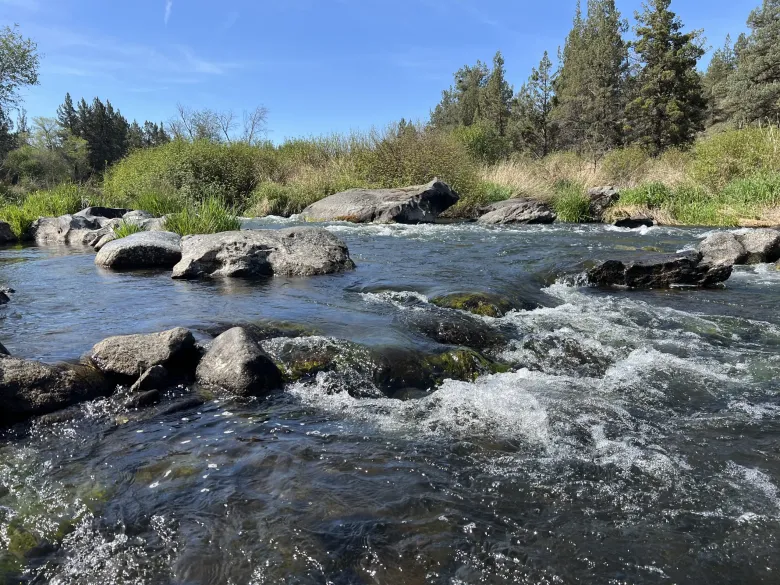
Hanging from the wall of Josh Wedding’s office is a black and white photo from 1954. It shows how the City of Redmond used to pull water from the Deschutes River, storing it in a pond and piping it downhill using gravity to homes and businesses. When demand grew following World War II, the City began supplementing its water supply with a Central Oregon Irrigation District diversion canal — hardly a clean source. Algae growth in the canals forced the City to build a treatment plant.
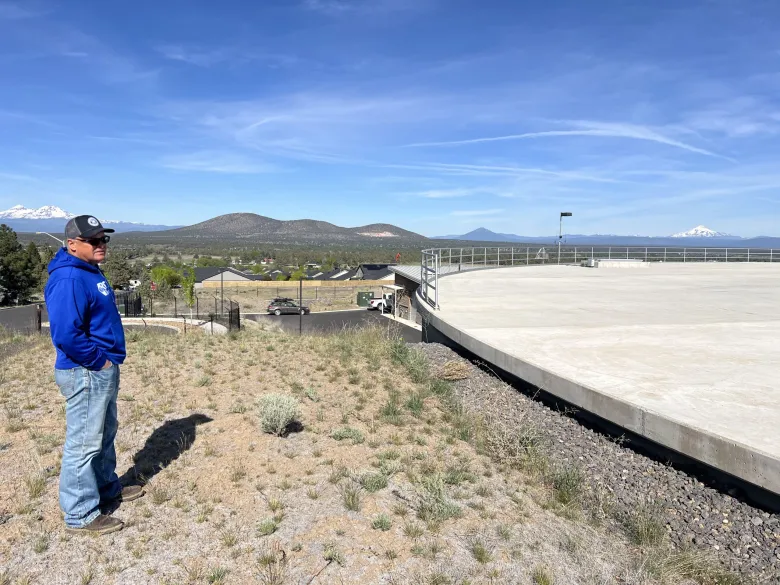
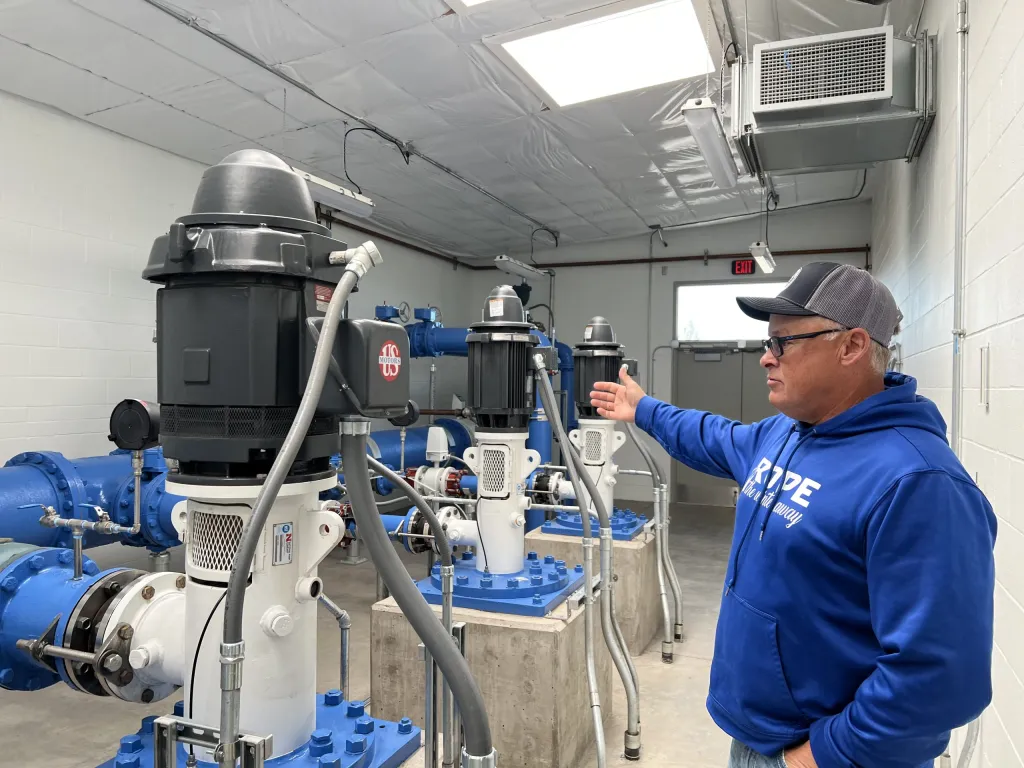
Wedding, the City’s public works operations manager, chuckles when he describes the old system. The City has come a long way since then. Part of Wedding’s job is to oversee a system of eight wells that pull water from crevasses in rock, hundreds of feet underground, into multi-million-gallon reservoir tanks at the surface. There is no need for a treatment plant. After falling as rain and snow in the Cascade Mountains, the water seeps through miles of porous volcanic soil and rock — a natural, free purifier for the City’s sole water source.
While the switch underground solved the algae issue, water remains one of the biggest challenges facing the City of Redmond today. Persistent drought, rapid population growth, shifting regulations and other changes are raising long-term questions about the future of Redmond’s groundwater, which continues to drop farther and farther below the growing communities that depend on it.
Death by a thousand cuts
Last year, Redmond got what Wedding considers a win for Redmond: the ability to pump groundwater at a higher rate.
“Anytime you’re dealing with water rights and you get something, that’s a win,” Wedding told the Source.
But it wasn’t exactly what the City had asked for. When it first applied for a new groundwater permit in 2023, it wanted not only to increase the amount of groundwater it could pump at any given moment, but also volume it could pump in an entire year.
Officials at the Oregon Water Resources Department, the state agency in charge of issuing new water use permits, said no. The department cited plummeting levels in the Deschutes Basin aquifer, the water trapped in permeable rock hundreds of feet below Central Oregon.
Redmond’s application, along with other denied permits, portend an uncertain future for municipal groundwater allocation in Central Oregon.
Since the 1990s, the aquifer under Redmond has dropped by more than 40 feet. And the rate of decline has picked up in recent years, from 1 foot per year to 2 feet per year or more.
“It’s kind of a combination, a death by a thousand cuts sort of scenario,” Joe Kemper, an Oregon Water Resources Department hydrologist for the Deschutes Basin, told the Deschutes County Board of County Commissioners in a March 2 presentation. Kemper described that the warming climate means less rain and snowfall in the mountains, and in turn, less water eventually makes its way through the soil and rock to recharge the aquifer from what’s pulled out by cities and private wells across the county.
According to Kemper, eight of the last 12 years in the Deschutes Basin have seen below-average precipitation levels. Plus, irrigation districts that pull water from the Deschutes River to supply farmers with water for crops are piping more and more canals. That makes water delivery to farmers more efficient, but eliminates leakage that incidentally helped refill the Deschutes aquifer for 100 years, Kemper explained. Meanwhile, as Central Oregon’s population has boomed, cities have asked to pump more water, and people drill new and deeper wells in rural parts of the region.
Municipal use is only a fraction of the water allocated in the Deschutes Basin.
For hydrologists and regulators, the declining aquifer has raised alarm bells — and put a 70-year-old law into action.
Over capacity
Oregon’s 1955 Ground Water Act established groundwater as a public resource and set the framework for using it through a permit system. It mandated the state to maintain “reasonably stable” groundwater levels.
But state regulators say that definition was never clearly defined — until 2024. That’s when the state administered new rules to apply when assessing whether cities and other users should be allowed to pump more groundwater than previously allowed. The rules defined an unstable aquifer as declining faster than 0.6 feet per year, or 25 feet total.
“The new rules will likely result in fewer permits being issued for new groundwater uses,” wrote Jason Cox, public information officer with the water resources department, in an email to the Source on May 7. “This will help protect existing wells from going dry and will better protect existing water users.”
Though Redmond’s initial application for more groundwater came before the new groundwater rules were passed, the water agency still found it was “not within the capacity” of the resource for the City to take more, Cox said. One test well in the Redmond area had dropped “excessively,” or by more than 50 feet. Others were forecasted to reach that mark soon.
The state has allowed Redmond to raise its overall pumping rate from 21,000 gallons per minute to about 23,000, without raising its cumulative annual water use. That allows the City to meet higher demand in the summer.
Reconciling water and growth
As population growth cools across the state, Deschutes County and the City of Redmond are still outpacing other areas. Redmond grew by 2% from 2024 to 2025 and by 14% since 2020.
Redmond officials are confident the new permit will satisfy growth needs for the next 15 to 20 years. In that time, the City is expected to grow from about 38,000 to anywhere from 51,000 to 55,000 people.
Cities aren’t allowed to moderate growth. Instead, they must plan for it. The state predicts Redmond will need to add 10,250 housing units by 2040 to meet demand and make up for historic underproduction. Redmond — and all other jurisdictions in Oregon — must create long-term plans for growth according to the state’s set of land use planning goals set up in the 1970s. That includes neighborhood designs, streets, sewer and water systems, and more.
“Cities are going to be required to grow and to provide those vital services, like water, sewer, police, etc.,” Redmond Mayor Ed Fitch told the Source in an interview. “Yet at the same time, on the water resources side, they’re saying, ‘Hey, look, you may not get more water,’ which does not make a lot of sense. The question is, how do we reconcile those two?”
One certainty is that the City will need to get more stringent with the water it is allowed to pump from the ground. That’s already in motion through the City’s conservation program. Since 2017 the City has offered a rebate program to pay back homeowners for costs associated with becoming more water-efficient, including installing weather-based irrigation control systems, which automate sprinklers and outdoor watering to ease off when it’s cooler and pick up when it’s hot.
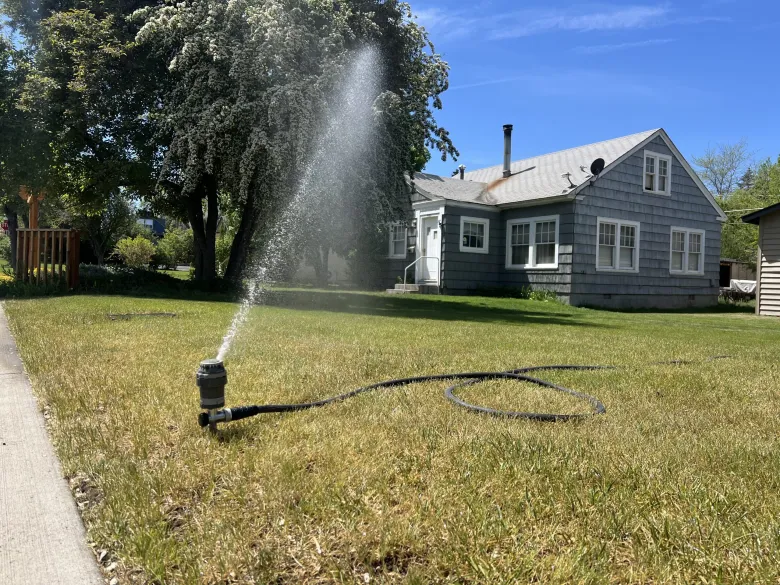
Redmond does not offer rebates for homeowners who choose to tear out their lawns in favor of low-water landscaping — a conservation tool that’s become increasingly popular in Bend. Wedding, the public works director, said paid lawn removal could be an option in the future. But he says efficient irrigation devices offer better return on investment because they can generally reach more people for the same cost. For example, Bend’s program offers up to $3,000 per household for lawn removal, while Redmond rebates $125 per customer for weather-based irrigation systems.
Redmond’s efforts have helped shave the City’s overall water use in recent years despite the booming population.
Also helping the City are state land use planning rules dictating denser types of housing development. According to Wedding, denser development is more water efficient, partially because townhomes, condos and apartments generally have less irrigable outdoor space than single family homes.
In the future, Redmond may also be able to pursue transfers of existing water rights in the basin, which would allow the City to increase groundwater pumping.
“There’s all kinds of moving parts in this long range,” Fitch told the Source. “I don’t think the state wants to see cities in Central Oregon locked in where they can’t grow. The state needs Central Oregon to prosper.”
Going deeper
As the City works on conservation efforts, the declining aquifer could have other consequences for Redmond.
According to Wedding, some of the City’s oldest wells from the 1960s and ‘70s are at risk of drying up. Because the wells are too old, the City can’t make them any deeper. Newer wells drilled in the last 10 years are extremely deep — up to 850 feet — and not at risk of drying up, but the City may have to lower pumps on those wells to reach water.
“If those water levels really start dropping, now is the time we start asking for outside funding to mitigate those steps, saving in a different way for capital projects, whether it’s deepening a well, lowering a pump,” Wedding said. “Those are issues that we will face if things go worst-case scenario.”
